SAFE GLASS
SOLUTIONS

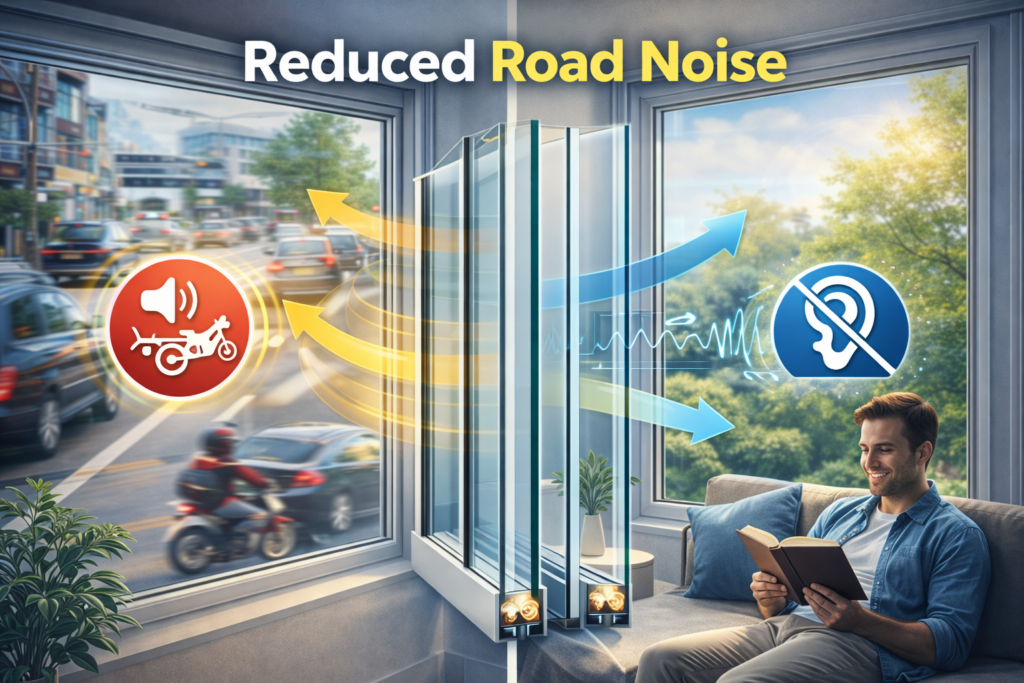
For many homeowners and business owners, outside noise is more than just a small inconvenience. Constant traffic, passing vehicles, trucks, motorcycles, and street activity can affect comfort, concentration, sleep, and overall quality of life. If your property is located near a main road, busy street, commercial area, or high-traffic intersection, choosing the right glass can make a noticeable difference.
Reduced road noise is one of the most valuable benefits of modern glazing solutions. The right type of glass can help create a calmer, quieter, and more comfortable indoor environment.
Road noise can enter a building through many openings, but windows and glass doors are often among the biggest weak points. Even a well-built home or office can feel noisy inside if the glass allows too much outside sound to pass through.
This can lead to problems such as:
difficulty sleeping
reduced comfort in living areas
distractions while working from home
a less peaceful indoor atmosphere
reduced comfort for customers and staff in commercial spaces
For properties close to traffic, sound control should be an important part of the glazing decision.
Glass can reduce noise by creating a stronger barrier between the inside and outside of a building. Some glazing systems are much better than others at limiting how much sound travels through them.
Noise reduction performance can be improved by factors such as:
thicker glass
laminated glass
double glazing
different glass thicknesses in the same unit
better sealing around windows and doors
The best result usually comes from choosing a glazing system designed specifically with acoustic performance in mind.
Laminated glass is one of the most effective options for reducing road noise. It consists of two or more layers of glass bonded together with an interlayer. That interlayer does not only improve safety — it can also help dampen sound vibrations as they pass through the glass.
This makes laminated glass a strong choice for properties exposed to traffic noise, especially where a quieter indoor space is a priority.
Double glazed units can also improve sound reduction by using two panes of glass separated by a sealed gap. This extra barrier can help reduce the amount of outside noise entering a building.
In many cases, double glazing is chosen not only for insulation and energy efficiency, but also for improved acoustic comfort. Depending on the design, it can offer a more peaceful indoor environment compared to standard single glazing.
Road-noise-reducing glass is especially useful in:
homes near main roads
apartments facing busy streets
bedrooms facing traffic
home offices
living rooms with large windows
schools and childcare spaces
shopfronts
offices and meeting rooms
commercial properties in high-traffic areas
In these spaces, even a moderate reduction in outside noise can noticeably improve comfort.
For homeowners, reduced road noise can improve everyday life in simple but important ways. A quieter home feels more relaxing and private. Bedrooms become more restful, and shared living spaces become more pleasant for conversation, watching television, reading, or simply enjoying quiet time.
Glazing designed for sound reduction can help homeowners:
create a calmer indoor atmosphere
sleep better
reduce unwanted traffic noise
improve comfort in living and working areas
increase the overall enjoyment of the home
Commercial spaces can also benefit greatly from improved acoustic performance. Excessive street noise can make it harder for staff to focus and may affect how comfortable a space feels for customers or clients.
Reduced road noise can help businesses:
improve concentration in offices
create more comfortable meeting rooms
reduce distractions in retail spaces
create a calmer environment for customers
improve overall workplace comfort
A quieter commercial space often feels more professional and welcoming.
It is important to understand that not all glass provides the same level of sound control. Standard single glass usually offers limited protection against traffic noise. Better acoustic performance often requires a more specialised solution.
The best option depends on factors such as:
the level of outside noise
the size and location of the glass
whether the room is a bedroom, office, or living area
whether safety, energy efficiency, or both are also important
For some properties, laminated glass may be the best solution. For others, double glazing or a combination of both may provide stronger results.
Reducing road noise is not only about comfort. The right glazing can also provide other valuable benefits at the same time, including:
improved safety
better energy efficiency
stronger overall performance
improved indoor comfort
a more premium feel for the property
This makes noise-reducing glass a practical long-term upgrade rather than just a luxury feature.
The most effective glazing choice depends on the building, the level of traffic exposure, and the function of the space. A professional assessment can help identify which areas need the most sound protection and what type of glass is most suitable.
Choosing the right glass can make a real difference to how a home or commercial property feels every day.
Reduced road noise is one of the most important benefits modern glazing can offer, especially for properties located near busy roads and urban areas. The right glass can help transform a noisy space into one that feels calmer, quieter, and more comfortable.
At SafeGlass, we believe glass should not only provide visibility and style but also improve the way a space performs. If road noise is affecting your comfort at home or at work, the right glazing solution can help create a more peaceful indoor environment.