SAFE GLASS
SOLUTIONS

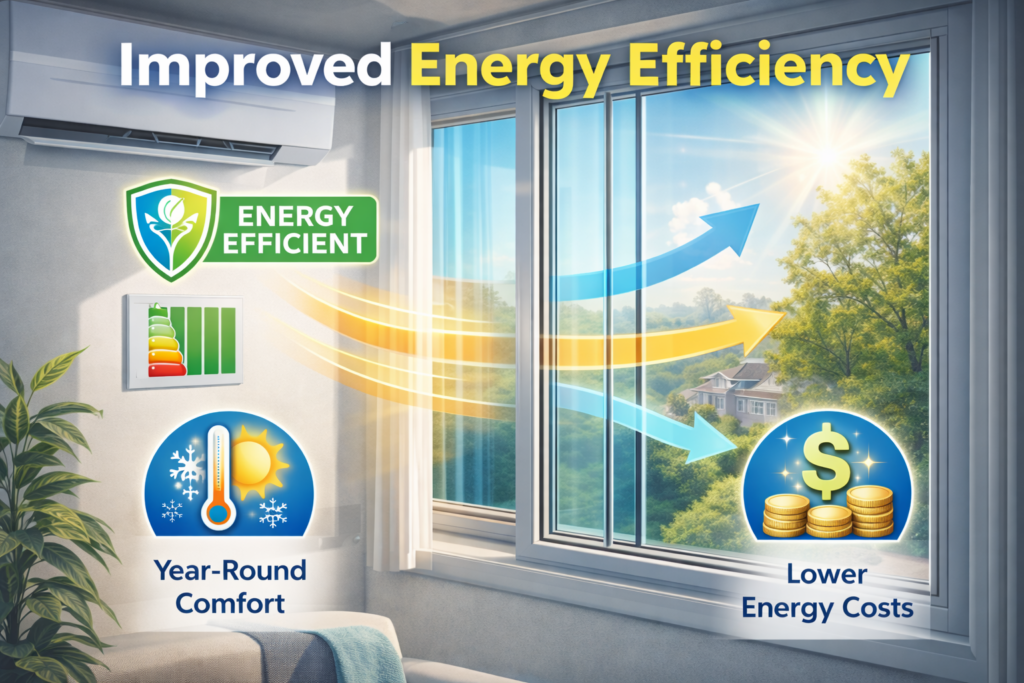
Energy efficiency has become one of the most important considerations in modern homes and commercial buildings. People want spaces that feel comfortable throughout the year without relying too heavily on heating and cooling systems. One of the most effective ways to improve this is by choosing the right type of glass.
Glass plays a major role in how a building performs. It affects heat gain, heat loss, natural light, and overall indoor comfort. When selected carefully, glazing can help reduce energy waste while creating a more pleasant environment inside.
Improved energy efficiency means using building materials and systems in a way that reduces unnecessary energy use. In simple terms, it means keeping indoor spaces cooler in summer, warmer in winter, and more comfortable all year round without overworking air conditioners or heaters.
Windows and glass doors are some of the biggest areas where heat can enter or escape a building. Poorly performing glass can allow too much outside temperature to affect the interior. Better glazing helps control that transfer.
Glass is not just a transparent material that lets in light. It is also a barrier between the inside and outside of a building. If that barrier is weak, indoor temperature can be affected more quickly by the weather outside.
In hot conditions, glass can allow excessive solar heat to enter a room. In cold conditions, indoor heat can escape through the glass more easily. This can make a space less comfortable and increase reliance on heating and cooling systems.
That is why improved energy efficiency often starts with better glazing solutions.
The right glass can improve thermal performance in several ways. Depending on the product and application, it can help:
reduce heat transfer
improve indoor temperature stability
lower energy use for heating and cooling
reduce strain on air conditioning systems
improve comfort near windows and doors
support a more sustainable building design
This makes energy-efficient glazing a practical option for both residential and commercial properties.
There are several types of glazing that can improve energy efficiency, depending on the needs of the space.
Double glazing uses two panes of glass with a sealed space between them. This added layer helps reduce the transfer of heat and can improve insulation significantly compared to single glass.
Some laminated glass products can also contribute to overall building performance, especially when combined with other energy-efficient glazing options. In addition to safety and sound benefits, laminated glazing can support better comfort in certain applications.
Modern glazing solutions may include specialised coatings, tinted finishes, or other enhancements that help reduce unwanted heat gain while still allowing natural light into the building.
The best option depends on the building type, its orientation, and how the space is used.
For homeowners, improved energy efficiency can make a noticeable difference in everyday comfort. Rooms can feel more stable in temperature, and areas near windows may be less affected by outside weather conditions.
Energy-efficient glass can help homeowners:
keep living spaces more comfortable
reduce excessive summer heat
retain warmth better during cooler months
improve the performance of windows and doors
support a more efficient and modern home
It is especially useful in large windows, sliding doors, street-facing rooms, and sun-exposed areas.
Commercial buildings also benefit from improved energy efficiency. Offices, retail spaces, and other workplaces often rely on glazing for visibility, natural light, and presentation. But if the glass does not perform well, indoor comfort can suffer.
For businesses, energy-efficient glazing can help:
improve comfort for staff and customers
create more stable indoor temperatures
reduce reliance on heating and cooling
support a better working environment
improve the long-term performance of the building
This can be especially valuable in spaces with large glass fronts or strong sun exposure.
Improved energy efficiency is not only about reducing electricity use. It is also about creating spaces that feel better to live or work in. A more comfortable building is often a more usable and enjoyable one.
Depending on the type of glazing used, energy-efficient glass can also offer additional benefits such as:
better comfort all year round
reduced glare in some situations
improved sound control in some configurations
a more modern and higher-performing building envelope
Not every property needs the same solution. The right type of glass depends on factors such as climate, building design, sun exposure, and how the room is used.
A professional assessment can help identify:
which areas lose or gain the most heat
whether double glazing is suitable
whether added safety or acoustic performance is also needed
which glazing solution offers the best balance of comfort, efficiency, and appearance
Choosing the right glass is about matching the product to the real needs of the building.
Improved energy efficiency is one of the strongest reasons to invest in quality glazing. The right glass can help make a home or commercial property more comfortable, more practical, and better suited to year-round use.
At SafeGlass, we understand that glass should do more than provide light and visibility. It should also contribute to comfort, performance, and long-term value. Energy-efficient glazing is a smart way to improve how a space looks, feels, and functions.
If you are considering new windows, glass replacement, or an upgrade to better-performing glazing, improved energy efficiency is well worth keeping in mind.